
By on Dec 31, 2025
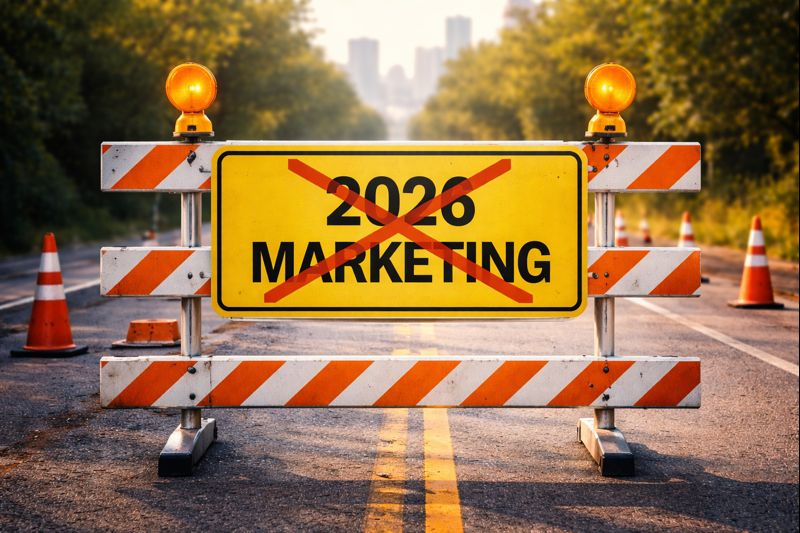
If you are new to marketing, 2026 can feel intimidating. There are more tools than ever, more platforms competing for attention, and no shortage of opinions about what you “should” be doing. It is easy to assume that success comes from doing more. More posts, more ads, more content, more activity. For a long time, that belief made sense. Visibility used to scale with output.
That logic is breaking down.
As marketing continues to evolve, especially with the rise of AI-powered tools, many of the habits that once worked are quickly losing effectiveness. Some are simply outdated. Others are actively working against results. If you are just getting started, understanding what not to do in 2026 may be more valuable than learning the latest tactic.
One of the biggest mistakes beginners make is creating content simply because it feels expected. Posting because “it’s been a while” or publishing something that does not clearly help anyone is becoming a losing strategy. AI tools have made it incredibly easy to produce large volumes of content, but ease does not equal impact. When content lacks a clear message, purpose, or human point of view, audiences quickly tune it out.
Platforms are also getting better at recognizing low-value content and reducing its reach. Industry trend analysis suggests that generic, undirected AI content is one of the practices most likely to fail in 2026 because it leads to sameness and weak engagement rather than trust or differentiation. AI can be helpful, but only when it supports real thinking instead of replacing it.
For years, beginners were taught that marketing success came from using the right keywords as often as possible. While keywords still matter, search engines and social platforms now prioritize content that genuinely answers questions and solves problems. Content written only to rank, without considering why someone is searching in the first place, tends to perform poorly.
The same industry analysis points out that keyword stuffing and shallow SEO tactics are rapidly becoming ineffective as algorithms improve their ability to understand meaning and usefulness. Instead of chasing phrases, beginners should focus on clarity. When you clearly address a real need, visibility tends to follow naturally.
Treating marketing as something you turn on and off is another habit that will not survive into 2026. Running a campaign, waiting for results, then disappearing rarely builds momentum. Marketing works best as a connected system, where your website, social presence, email, and ads reinforce one another and tell a consistent story.
Businesses that rely on fragmented, one-off efforts often struggle to build long-term trust or recognition. Design and strategy firms increasingly warn that disconnected marketing leads to wasted effort and inconsistent performance. For beginners, this means thinking beyond quick wins and focusing on steady progress over time.
Posting frequently used to be a reliable growth strategy. Today, it often leads to burnout and diminishing returns. Audiences are overwhelmed with content and have become skilled at ignoring anything that feels repetitive or unnecessary. In 2026, quality will matter far more than quantity.
One thoughtful piece of content that clearly explains something or solves a problem can outperform dozens of rushed posts. If your content does not inform, clarify, or genuinely help someone, it is unlikely to leave an impression.
Marketing is not a one-way broadcast, yet many beginners treat it as such. Comments, questions, and feedback are not distractions. They are signals that real people are paying attention. Engagement helps platforms understand relevance, but more importantly, it builds trust with your audience.
Responding thoughtfully shows that there is a human behind the brand. That human presence is becoming more valuable, not less, as automation increases.
Paid advertising still has an important role, but relying on it alone is risky. Ads work best when they amplify strong messaging and real value. Simply increasing spend without a solid foundation often leads to wasted budget and short-lived results.
Marketing leaders increasingly emphasize balancing paid channels with owned channels such as blogs, email lists, and content libraries that build long-term equity rather than temporary spikes (LinkedIn analysis).
At Umbrella Local, we help service-based businesses grow with digital marketing that actually works. If you want visibility beyond search and into stories, feeds, and local timelines, our team can take the guesswork out of your campaigns.
We specialize in creator-driven local marketing and also provide a full range of support to help your business succeed, including email marketing, business listings, SEO, advertising, review generation, and website solutions. Umbrella Local
Our creator-focused services include:
Creator-match consultations to connect you with the best creators for your audience
Content brief support so creators stay aligned with your brand
Landing-page tracking to measure campaign performance
Monthly campaign fulfillment to turn visibility into real bookings and leads
Let us help you get visible where your customers already spend time.
Schedule a call today to start your first creator-driven local service campaign.
Use our free tool to get your score calculated in under 60 seconds.